Paid social media campaigns can deliver strong results, but only when businesses choose the right platform for the right objective.
Every social media platform has a different audience, content style and advertising strength. A platform that works well for one business may not be the best choice for another.
The right platform depends on the business goal, target audience, campaign budget, content format and expected outcome.
LinkedIn Ads
LinkedIn is one of the most important platforms for B2B paid social media campaigns. It is known as a professional networking platform and is widely used by business leaders, decision-makers, employees, recruiters, founders and industry experts.
LinkedIn Ads can help businesses target users based on professional details such as job title, industry, company, seniority, skills, education, location and company size.
This makes LinkedIn especially useful for B2B marketing.
Businesses can use LinkedIn Ads for lead generation, employer branding, webinar promotion, event campaigns, thought leadership, account-based marketing and recruitment.
For example, a software company can target IT leaders. A consulting firm can reach CXOs. A professional services company can promote an industry report to senior decision-makers. A company hiring for specialised roles can reach relevant professionals.
LinkedIn Ads may be more expensive compared to some other platforms, but the targeting quality can make it valuable for high-ticket B2B products and services.
Meta Ads: Facebook and Instagram
Meta Ads include advertising across Facebook, Instagram, Messenger and other Meta placements.
Facebook and Instagram are among the most widely used platforms for consumer-focused paid social media campaigns. They are useful for brand awareness, engagement, lead generation, website traffic, ecommerce sales, app promotion and retargeting.
Instagram is especially strong for visual storytelling. Reels, Stories, carousel ads and video ads can help brands showcase products, services and experiences in an engaging way.
Meta Ads are useful for ecommerce brands, local businesses, creators, coaches, restaurants, real estate companies, fitness brands, beauty brands, fashion brands and service businesses.
For example, an ecommerce brand can promote products through Instagram ads. A restaurant can target people in a nearby location. A real estate business can collect enquiries through lead forms. A creator can promote content to increase reach and profile visits.
Meta Ads also offer strong retargeting options. Businesses can retarget people who visited their website, engaged with Instagram content, watched videos or interacted with previous ads.
YouTube Ads
YouTube is one of the strongest platforms for video advertising.
Video has the power to explain, educate and build emotional connection. This makes YouTube useful for brands that need storytelling, product explanation or long-form attention.
YouTube Ads can be used for brand awareness, product launches, explainer videos, customer testimonials, educational campaigns, app installs, website traffic and remarketing.
For example, a financial brand can use YouTube to explain a complex product. A technology company can show a product demo. A travel brand can use video to create aspiration. An education business can promote a course through informative video content.
YouTube works well when the product or service requires explanation or trust-building.
It can also support other paid social campaigns. A user may first discover a brand through a YouTube ad and later convert through a retargeting ad on another platform.
TikTok Ads
TikTok is a major platform for short-form video advertising in many markets. It is especially useful for brands that want to connect with younger audiences through entertaining, fast and creator-style content.
TikTok Ads can support awareness, consideration and conversion objectives.
The platform works well for brands in fashion, beauty, food, fitness, entertainment, apps, lifestyle, consumer technology and ecommerce.
However, TikTok requires a different creative approach. Ads that feel too corporate or overly polished may not always perform well. Content needs to feel native to the platform.
Strong TikTok ads usually have a sharp hook, fast pacing, relatable storytelling and platform-friendly editing.
For brands that understand short-form video, TikTok can be a powerful discovery channel.
X Ads
X, formerly Twitter, can be useful for brands that want to participate in real-time conversations.
The platform is often used for news, technology, finance, politics, sports, entertainment, opinions and live events.
X Ads can support website traffic, awareness, engagement, app promotion and conversation-led campaigns.
For example, a technology company can promote a product launch. A media brand can promote breaking stories. A founder can build thought leadership. A brand can amplify event-related updates.
However, businesses should evaluate whether their target audience is active on the platform. They should also consider brand safety, content tone and campaign context before investing heavily.
Pinterest Ads
Pinterest is different from many social media platforms because users often come there for ideas, inspiration and planning.
This makes Pinterest useful for visual categories.
Pinterest Ads can work well for home decor, fashion, beauty, food, travel, weddings, lifestyle, parenting, fitness and design.
For example, a home decor brand can promote room ideas. A fashion brand can showcase seasonal outfits. A travel company can promote destination guides. A food brand can promote recipes.
Pinterest users often have discovery and planning intent, which can make the platform valuable for brands that sell visually appealing products or services.
Snapchat Ads
Snapchat is a mobile-first platform with a younger audience base.
Snapchat Ads can be useful for brands targeting Gen Z and younger millennials. The platform supports visual, short-form and interactive advertising formats.
Snapchat can work well for fashion, beauty, entertainment, food and beverage, gaming, mobile apps, campus campaigns and youth-focused brands.
It also offers creative formats such as augmented reality experiences, which can be useful for brands that want interactive engagement.
How to Choose the Right Paid Social Platform
Choosing the right platform starts with the audience.
Ask these questions:
Who are we trying to reach?
Where does this audience spend time?
Are we targeting consumers or business decision-makers?
Is our product visual, educational or technical?
Do we need leads, traffic, awareness or sales?
Do we have strong video assets?
Is the campaign local, national or global?
What budget do we have?
How will success be measured?
If the goal is B2B lead generation, LinkedIn may be the strongest choice. If the goal is ecommerce sales, Meta or TikTok may work better. If the goal is video-based awareness, YouTube can be effective. If the product is highly visual and inspiration-led, Pinterest may be useful. If the audience is younger, Snapchat or TikTok may be relevant.
The best platform is not the one that is most popular. It is the one where your target audience is active and your campaign objective can be achieved efficiently.
Final Thoughts
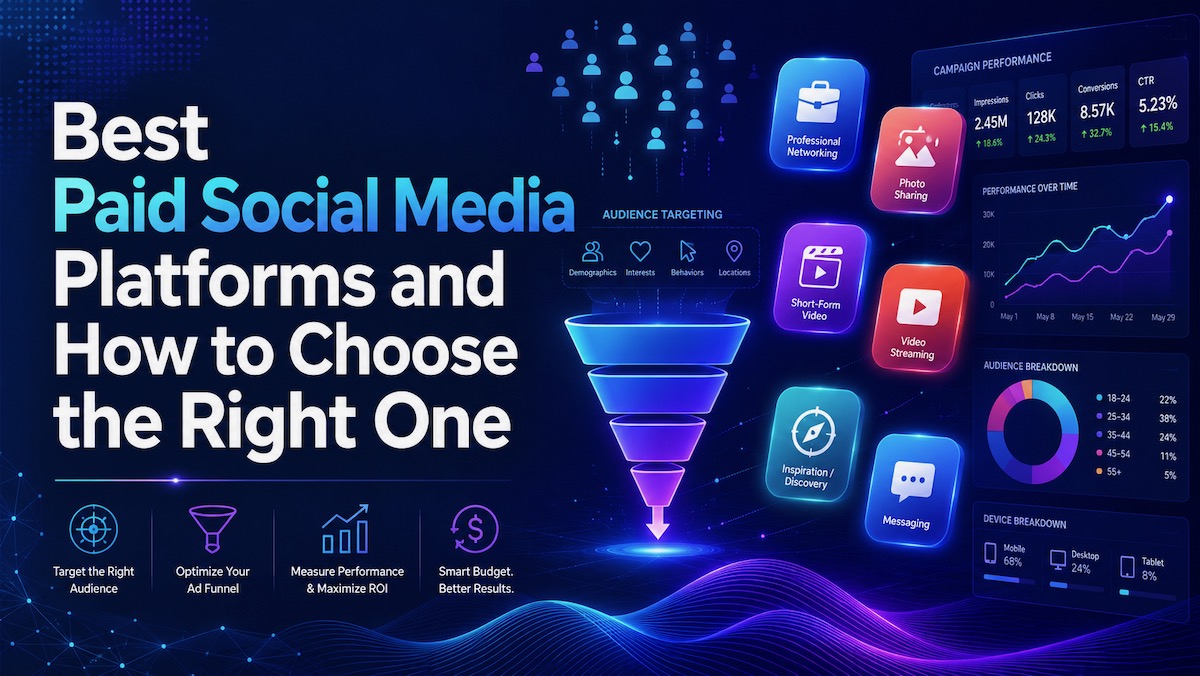
Paid social media platforms offer different advantages. LinkedIn is strong for professional targeting. Meta is powerful for consumer reach and retargeting. YouTube is ideal for video storytelling. TikTok works well for short-form discovery. Pinterest is useful for visual inspiration. Snapchat can help reach younger audiences.
A strong paid social media strategy does not randomly choose platforms. It matches the platform with the audience, objective, creative format and business goal.
When the right platform, targeting, content and measurement come together, paid social media campaigns can become a powerful growth engine for businesses.