
Organic social media is one of the most valuable tools for building a brand. It helps businesses share their story, engage with audiences, build trust and create a long-term digital presence. A consistent organic social media strategy can make a business look credible, active and relevant.
However, organic social media has one major limitation: it takes time.
Building a meaningful audience organically does not happen overnight. It can take months or even years for a business to grow a strong follower base. Even after a brand has thousands, lakhs or millions of followers, every post does not reach the full audience. Social media platforms use algorithms to decide what users see in their feeds. This means that only a portion of followers may actually see each organic post.
So, even if a business has a large following, it may still be reaching only a small percentage of its total potential audience.
This is where paid social media campaigns become important.
Paid social media campaigns allow businesses to reach the right audience faster. Instead of waiting for people to discover your brand organically, you can proactively take your message to people who are most likely to be interested in your product, service or content.
In today’s digital world, paid social media advertising is not just about boosting posts. It is about using data, targeting, content and campaign objectives to achieve business outcomes.
What Are Paid Social Media Campaigns?
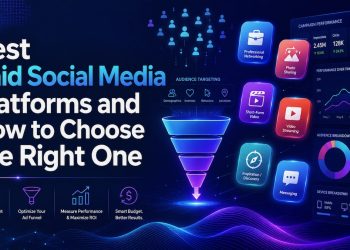
Paid social media campaigns are advertisements run on social media platforms to reach a specific audience. These campaigns can appear on platforms such as LinkedIn, Facebook, Instagram, YouTube, TikTok, X, Pinterest and Snapchat.
Unlike organic posts, paid campaigns are not limited to existing followers. You can target users based on location, interests, demographics, behaviour, professional profile, website visits, app activity, previous engagement and more, depending on the platform.
For example, a B2B company can use LinkedIn Ads to reach senior decision-makers in specific industries. An ecommerce brand can use Instagram and Facebook ads to retarget people who visited its website but did not purchase. A coaching business can use paid campaigns to generate leads from people interested in career growth, finance, education or personal development.
This ability to control who sees your message is one of the biggest benefits of paid social media marketing.
Why Organic Social Media Alone Is Not Enough
Organic social media is important, but relying only on organic reach can limit business growth.
First, organic growth is slow. A new business may publish high-quality content regularly but still take a long time to build visibility. The audience has to discover the content, engage with it and follow the brand.
Second, organic reach is unpredictable. A post that performs well today may not perform well tomorrow. Even strong content can get limited reach because platform algorithms are constantly changing.
Third, organic content gives limited control. When you publish an organic post, you cannot fully decide who sees it. The algorithm decides the distribution based on engagement signals, user behaviour and platform priorities.
Fourth, organic social media is difficult to scale quickly. If a business is launching a new product, hosting a webinar, promoting an offer or entering a new market, it may not have the luxury of waiting for organic reach to build gradually.
Paid social media solves these challenges by giving businesses speed, scale and targeting control.
Paid Social Media Gives Businesses Faster Reach
One of the strongest benefits of paid social media campaigns is speed.
With organic content, you wait for the audience to come to you. With paid campaigns, you go directly to the audience.
This is especially useful when a business wants to promote something time-sensitive, such as a sale, event, webinar, product launch, hiring campaign or seasonal offer.
For example, if a brand wants to promote an event happening next week, organic posts may not reach enough people in time. A paid campaign can immediately reach a defined audience and drive registrations.
Similarly, if a business is launching a new service, paid social media can create awareness among relevant people much faster than organic content alone.
This does not mean organic social media is not useful. It simply means that paid campaigns can accelerate visibility.
Paid Social Media Helps You Reach the Right Audience
The real power of paid social media is not just reach. It is relevant reach.
A business does not need to reach everyone. It needs to reach the people who matter.
Paid social platforms allow businesses to define audiences based on several factors, including:
Location, age, language, interests, behaviour, job title, seniority, industry, company size, website visits, previous engagement and customer lists.
This helps reduce wasted impressions.
For example, a luxury travel brand does not need to target everyone interested in travel. It may want to reach premium travellers, frequent flyers or people interested in luxury hotels. A B2B software company may want to reach IT heads, CTOs or procurement leaders. A financial services business may want to reach people interested in investments, credit cards, insurance or loans, subject to platform policies and applicable regulations.
Paid social media allows brands to move from broad communication to focused communication.
Paid Campaigns Support Different Business Goals
Another benefit of paid social media advertising is that campaigns can be aligned with specific business objectives.
A business can run campaigns for:
Brand awareness, website traffic, engagement, video views, lead generation, conversions, app installs, sales, event registrations, recruitment or retargeting.
This makes paid social media useful across the full marketing funnel.
At the awareness stage, paid campaigns help people discover the brand. At the consideration stage, they help users learn more through videos, blogs, landing pages, webinars or case studies. At the conversion stage, they encourage users to take action, such as submitting a form, booking a call, making a purchase or downloading an app.
This full-funnel capability makes paid social media a powerful part of digital marketing strategy.
Paid Social Media Works Best With Organic Content
Paid and organic social media should not be treated as opposites. The best results come when both work together.
Organic social media builds trust. Paid social media gives that trust scale.
Organic content helps a brand show consistency, personality and credibility. Paid campaigns help the brand reach more of the right people.
For example, a brand may publish thought leadership posts organically on LinkedIn. If one post performs well, it can be promoted through LinkedIn Ads to reach a larger professional audience. Similarly, an Instagram reel that performs well organically can be used as a paid ad creative.
In this way, organic content can provide insight, and paid campaigns can provide scale.
Final Thoughts
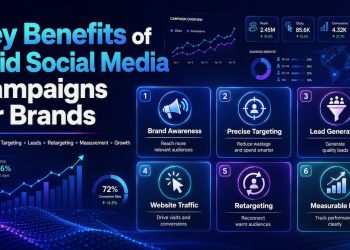
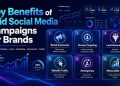
Paid social media campaigns are important because they help businesses overcome the limitations of organic reach. They provide faster visibility, sharper targeting, measurable outcomes and better control over campaign delivery.
Organic social media is still essential for credibility and community building. But for businesses that want faster growth, targeted reach and measurable results, paid social media advertising can play a major role.
The best digital marketing strategy does not choose between paid and organic. It uses both together.
Organic builds the foundation. Paid social media accelerates growth.